Air or Nitrox? A Practical Guide for Recreational Divers
Air or Nitrox? The honest answer is that neither is automatically “better”. The right choice depends on the depth, duration and number of dives you are planning, as well as your training and the cylinder you are using.
Air remains practical, widely available and entirely appropriate for a huge range of recreational dives. Nitrox can offer longer no-decompression limits and reduced nitrogen exposure, particularly during repetitive dives, but it introduces oxygen limits that every diver must understand.
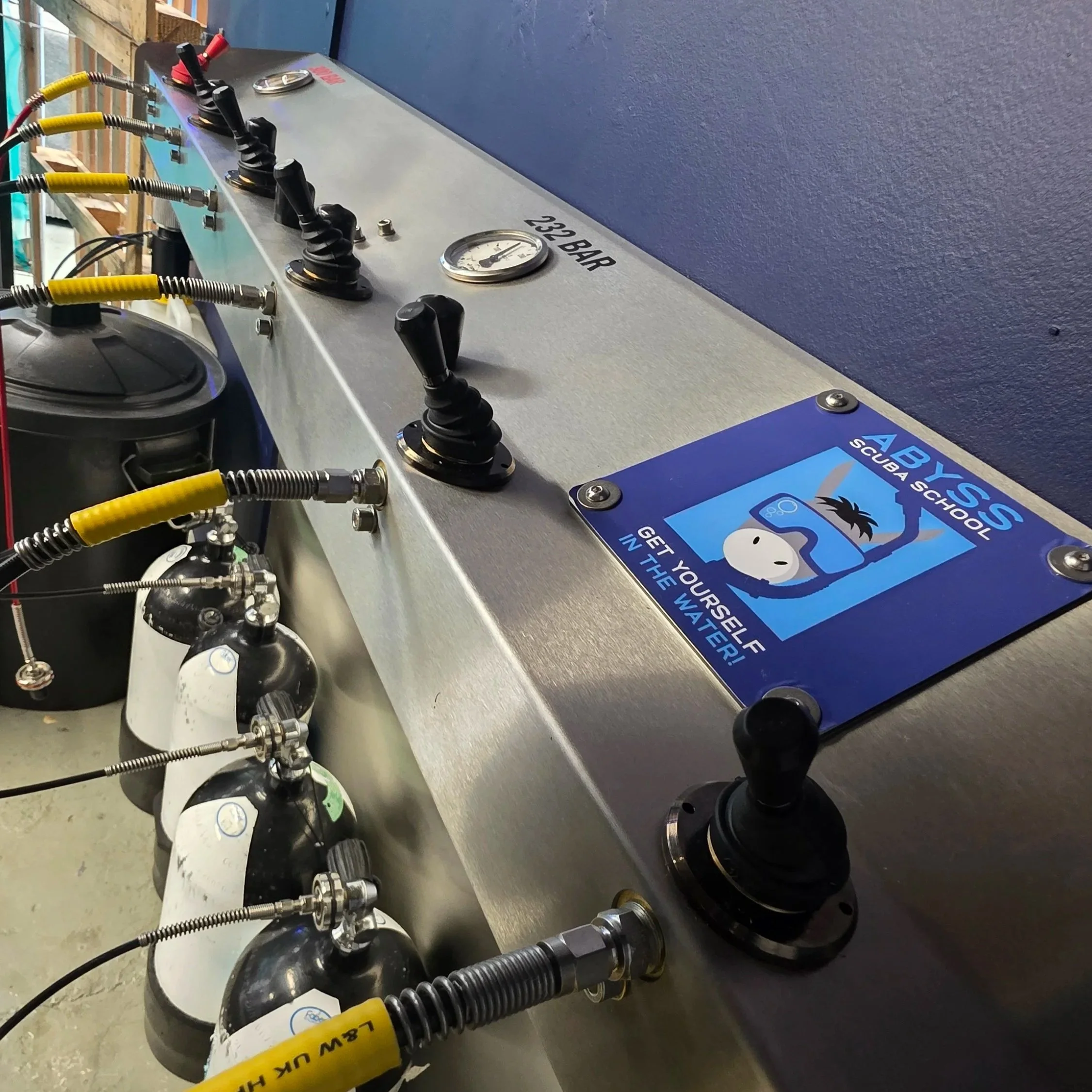
At Abyss Scuba School in Littlehampton, we now provide 232-bar and 300-bar air fills alongside Nitrox mixes from 21% to 40%, following an upgrade to our compressor and filling facilities. That gives local divers more choice, but choosing a gas should always begin with the dive plan, not simply with what is available.
What is the difference between air and Nitrox?
Ordinary compressed diving air contains approximately 21% oxygen and 79% nitrogen, with very small quantities of other gases.
Enriched Air Nitrox, usually shortened to Nitrox or EANx, contains more than 21% oxygen and therefore less nitrogen. Two commonly used recreational mixtures are:
EAN32: approximately 32% oxygen
EAN36: approximately 36% oxygen
Reducing the percentage of nitrogen means your body absorbs less nitrogen than it would while following the same profile on air. This can increase the available no-decompression time shown by a correctly configured dive computer.
However, increasing the oxygen percentage also brings the gas’s oxygen exposure limit into shallower water. That is why Nitrox is not simply “better air” and certainly is not a gas for going deeper.
When does Nitrox offer a real advantage?
Nitrox is particularly useful when your planned bottom time could otherwise be restricted by your no-decompression limit rather than by the amount of gas in your cylinder.
Repetitive diving
Nitrox can be valuable on days involving two or more dives. Because the diver is breathing less nitrogen at a given depth, nitrogen loading between dives can be reduced compared with completing the same profiles on air.
This is one reason Nitrox is popular on dive holidays, liveaboards and UK diving weekends, where several dives may be planned over consecutive days.
Longer dives at moderate depths
Nitrox is often most useful across the moderate recreational depth range. PADI gives an example in which the no-stop limit at 18 metres is 56 minutes on air and 95 minutes on EAN32 when calculated using its Recreational Dive Planner.
That does not mean every diver can remain underwater for 95 minutes. Your gas supply, breathing rate, temperature, conditions and the rest of the dive plan may end the dive much sooner.
A larger no-decompression allowance is useful, but it does not make your cylinder last longer. If you breathe a 12-litre cylinder at the same rate, changing its contents from air to Nitrox does not magically add more litres of gas.
Adding conservatism to an air-based profile
Some qualified Nitrox divers use Nitrox while keeping within air-based no-decompression limits. This reduces nitrogen exposure compared with completing the same profile on air.
It may provide an additional conservative element, but it does not eliminate decompression sickness risk. Appropriate ascent rates, safety stops, hydration, sensible profiles and personal risk factors still matter.
When might ordinary air be the sensible option?
For many recreational dives, air remains the straightforward and perfectly reasonable choice.
Air may make more sense when:
The dive is shallow and short
Your gas supply will run out well before your no-decompression time
You are completing a single dive with a conservative profile
Nitrox offers no meaningful benefit for the planned depth and duration
You are not qualified to use Nitrox
Your cylinder is not suitable for the filling method being used
The available Nitrox mix would have an unsuitable maximum operating depth
A relaxed shore dive in five metres of water, for example, is unlikely to become dramatically longer simply because the cylinder contains EAN32. Gas consumption, temperature, comfort and the conditions may be far more relevant.
This is why we encourage divers to choose a gas for the dive they are actually doing, rather than treating Nitrox as the automatic premium option.

Does Nitrox allow you to dive deeper?
No. This is one of the most important misconceptions to correct.
The higher oxygen percentage in Nitrox gives each mix a maximum operating depth, commonly called its MOD. Below that depth, the partial pressure of oxygen can become too high.
Using a working oxygen partial-pressure limit of 1.4 bar, the approximate maximum operating depths are:
EAN28: 40 metres
EAN32: 34 metres
EAN36: 29 metres
EAN40: 25 metres
These figures are provided as examples and must never replace proper training, personal gas analysis or dive planning. Always calculate the maximum operating depth using the oxygen percentage you personally measure in your cylinder.
Divers Alert Network describes a partial pressure of 1.4 ATA or below as the normal range for open-circuit recreational diving and warns that the margin for error becomes much smaller as oxygen exposure approaches 1.6 ATA. DAN’s oxygen-toxicity guidance
Nitrox is therefore best understood as a gas that can provide a no-decompression advantage within a shallower depth limit, not as a deep-diving gas.
Why must divers analyse their own Nitrox cylinder?
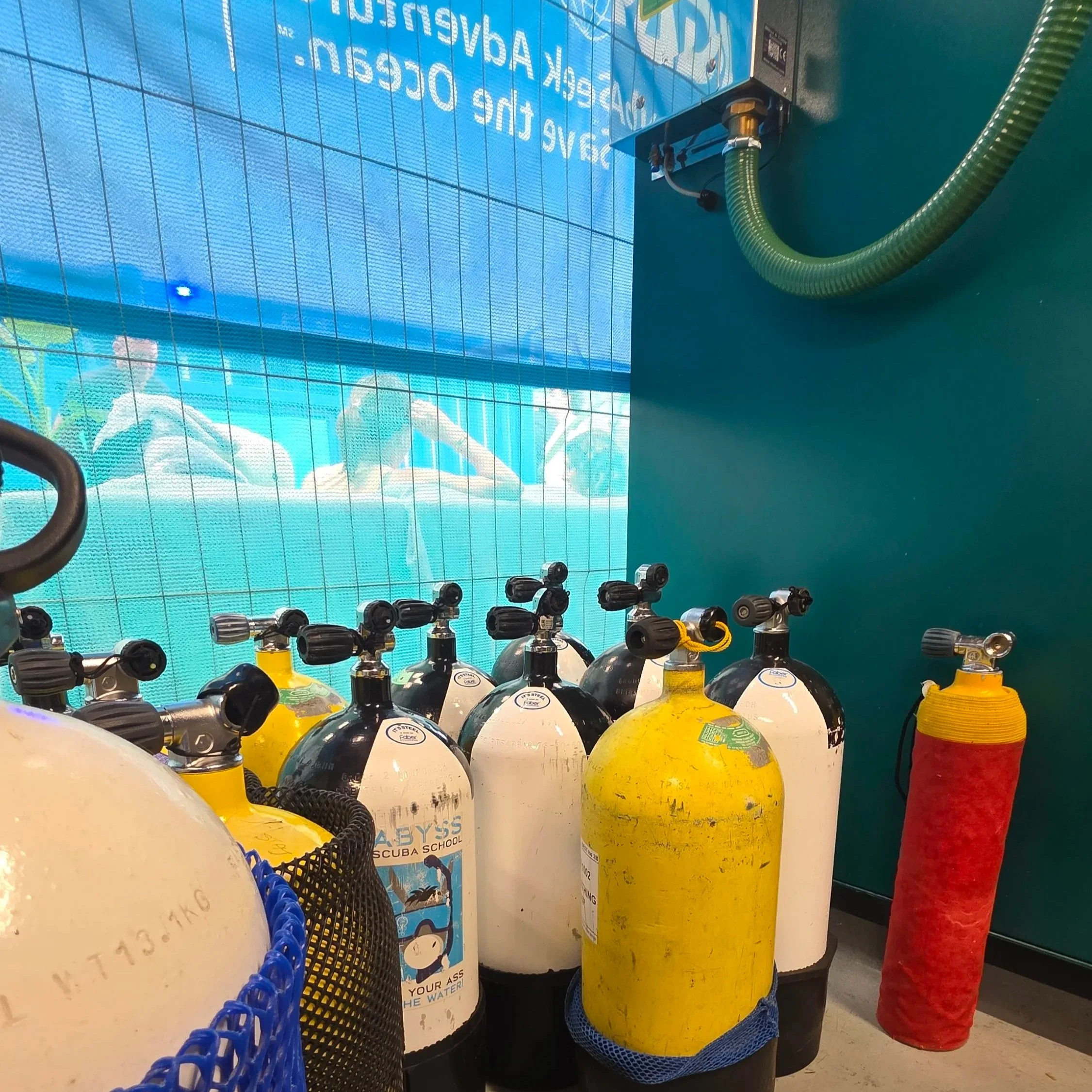
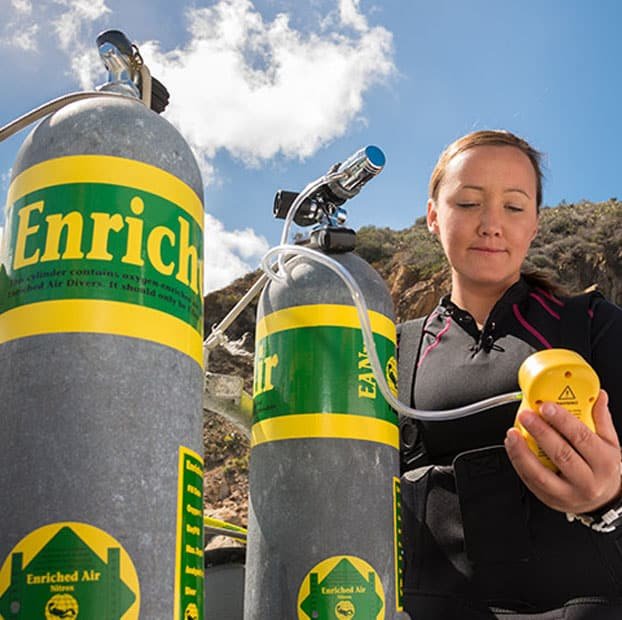
A qualified Nitrox diver should personally confirm the oxygen percentage before using the cylinder.
The normal process includes:
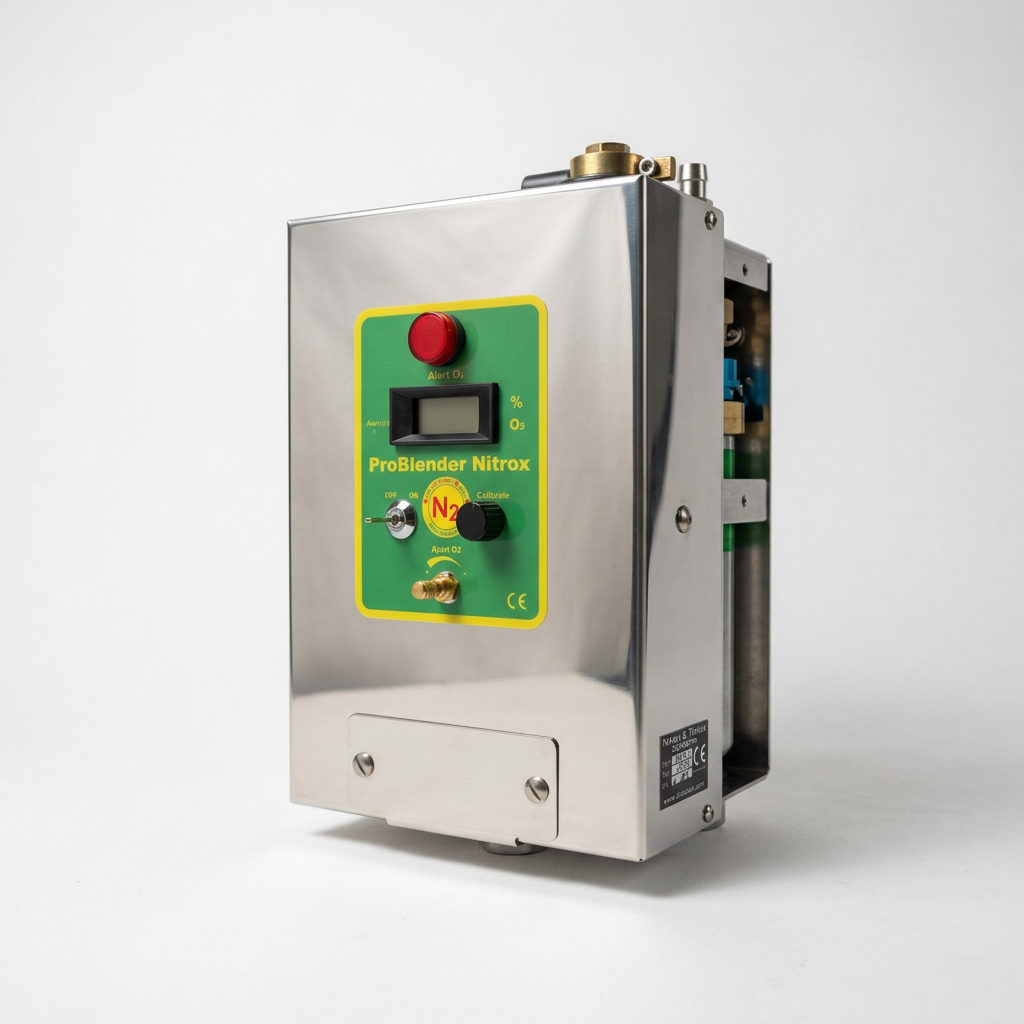
Analysing the gas using an appropriate, calibrated oxygen analyser
Confirming the measured oxygen percentage
Calculating or confirming the MOD
Clearly marking or logging the cylinder contents
Setting the dive computer to the measured mix
Checking that the planned depth remains within the MOD
Do not assume a cylinder contains EAN32 simply because that is what was requested. Analysis is one of the practical safeguards that prevents a diver from taking the wrong gas to the wrong depth.
It is also important to check your computer before every dive. A computer left on the previous day’s Nitrox setting can calculate misleading information if you are now using air or a different enriched-air mixture.
Do you need a qualification to dive with Nitrox?
You need appropriate training before independently planning and completing recreational dives using Nitrox.
The PADI Enriched Air Diver course teaches divers how to:
Understand the advantages and limitations of Nitrox
Recognise oxygen-exposure considerations
Determine the MOD of a gas
Analyse a cylinder
Record its contents correctly
Configure a compatible dive computer
Select an appropriate mix for a planned dive
At Abyss, the course combines PADI eLearning with practical instruction at our Littlehampton dive centre. You can handle an analyser, practise the correct checks and learn what the figures mean before relying on them during a real diving day.
What about claims that Nitrox makes you feel less tired?
Many divers say they feel less tired after diving with Nitrox. You will hear this around dive centres, boats and liveaboards all over the world.
However, that personal experience should not be presented as a guaranteed physiological benefit. Evidence has not established reduced post-dive tiredness as a dependable result for every diver.
The clear, measurable benefit is reduced nitrogen exposure for a given depth and time, which can produce longer no-decompression limits. Treat feeling fresher as an individual observation—not a reason to ignore normal rest, hydration or sensible dive planning.

Does a 300-bar fill mean a longer dive?
Potentially, but it is not as simple as choosing the highest pressure.
A suitably rated 300-bar cylinder contains more usable gas than an equivalent internal volume filled to 232 bar. However:
The cylinder and valve must be rated for 300 bar
Your regulator connection must be compatible
Higher-pressure cylinders may be heavier
Cylinder size and buoyancy characteristics still matter
Your gas plan must include an appropriate reserve
Not every diver or dive needs a 300-bar setup
Never put a 300-bar fill into a cylinder rated only for 232 bar. The cylinder’s markings, valve, test status and overall condition must be suitable for the requested fill.
Abyss can provide both 232-bar and 300-bar air fills, allowing divers to request the correct pressure for their own suitable equipment.
Air and Nitrox fills at Littlehampton Marina
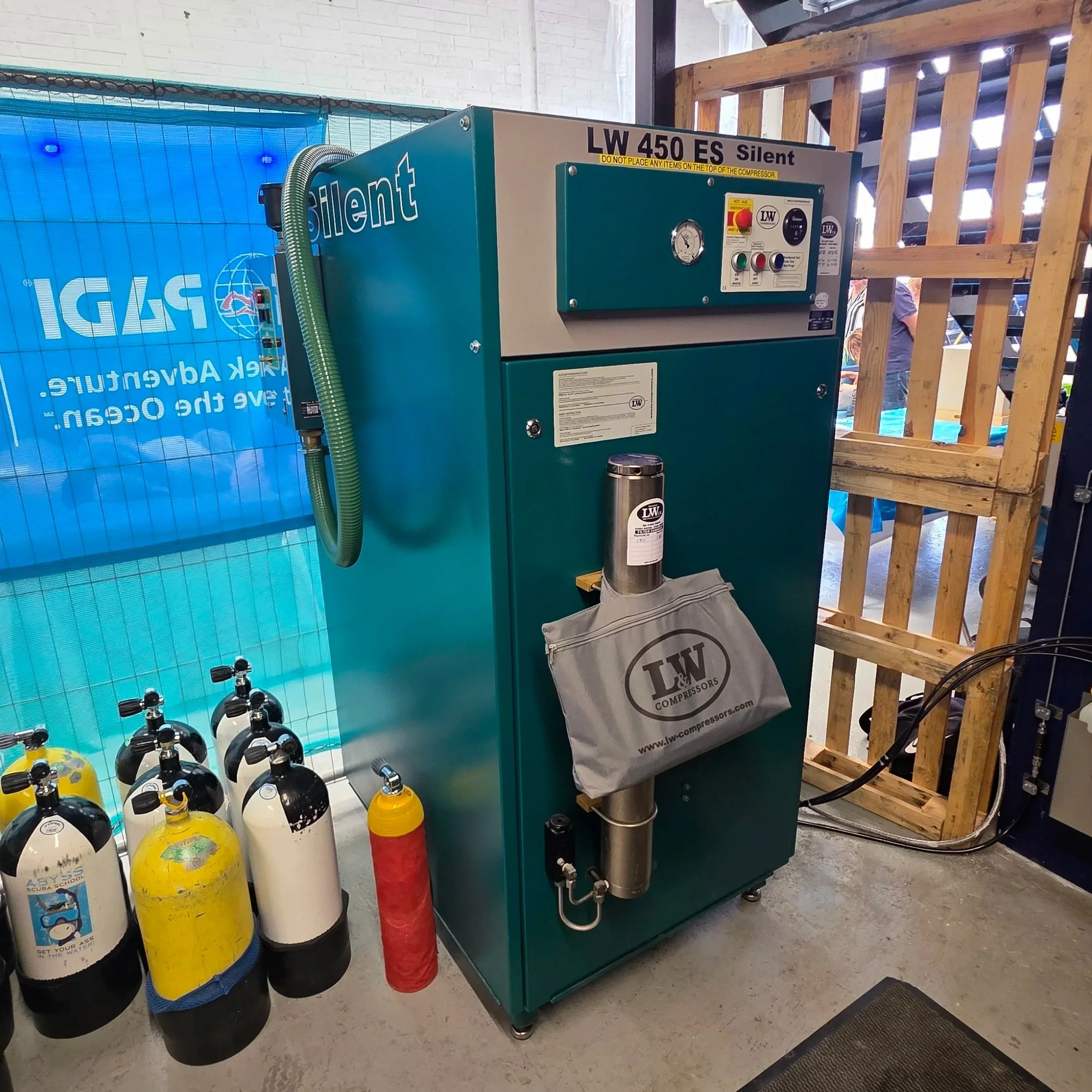
Our upgraded filling facilities allow us to support local recreational divers, clubs, courses and diving trips with:
232-bar air fills
300-bar air fills
Nitrox from 21% to 40%
Independently tested breathing air
Oxygen-clean filling procedures
Cylinder drop-off and collection from Littlehampton Marina
Free on-site parking
Before filling, a cylinder must be in test, serviceable and suitable for the requested gas and pressure. Nitrox cylinders must meet the applicable oxygen-clean requirements for the filling method, and divers remain responsible for personally analysing their mix before use.
Whether you are preparing for a local West Sussex dive, a UK weekend away or an overseas holiday, speak to us about the planned depth and profile if you are unsure which fill to request.
So, should you choose air or Nitrox?
Choose air when it meets the requirements of a straightforward recreational dive and Nitrox would provide little practical benefit.
Consider Nitrox when you are trained to use it and its reduced nitrogen content is useful for your planned depth, duration or repetitive-diving schedule.
Whichever gas you select:
Plan the dive
Know what is in your cylinder
Respect all depth and exposure limits
Configure your computer correctly
Monitor your remaining gas
Never allow a longer no-decompression limit to encourage poor gas management
Need a fill or want to become qualified to use Nitrox? Visit Abyss Scuba School at Littlehampton Marina to arrange a 232-bar or 300-bar air fill, a Nitrox mix from 21% to 40%, or your PADI Enriched Air Diver course.
