Nervous About Scuba Diving? What Your First Underwater Breaths Really Feel Like
If you feel nervous about scuba diving, you are not unusual and it does not mean diving is not for you.
Breathing underwater is completely different from anything most people have experienced. You are wearing unfamiliar equipment, breathing through your mouth and being asked to trust a regulator to deliver your air. Feeling apprehensive before trying it is a perfectly understandable response.
Your first scuba session should not involve being hurried into deep water or expected to act confident when you are not. At Abyss Scuba School, beginners start in our private heated indoor pool at Littlehampton Marina, where everything can be introduced gradually.
You can stand up, ask questions, practise at the surface and become comfortable with each step before moving on.
What does breathing underwater actually feel like?
The first breath through a regulator often feels unusual rather than difficult.
A regulator takes high-pressure air from your cylinder and delivers it at a pressure you can breathe. You place the mouthpiece between your teeth, seal your lips around it and breathe through your mouth.
At first, you may be very conscious of every breath. You might hear the air flowing into the regulator and notice bubbles passing your face when you breathe out. Your breathing may feel slightly louder and more deliberate than normal.
For many people, the strangest moment is lowering their face into the water while continuing to breathe. Your instincts may briefly tell you that those two things should not happen together.
Then the regulator delivers another breath.
After a few calm breaths, most beginners begin to realise that the equipment is doing exactly what it should. Their shoulders relax, their breathing settles and curiosity starts replacing nerves.
You do not need to take enormous breaths or breathe unnaturally slowly. The aim is simply to breathe continuously and comfortably, without holding your breath.
Will it feel difficult to breathe through the regulator?
A correctly functioning, properly maintained regulator should supply air whenever you inhale.
It may not feel exactly like breathing in the open air because you have a mouthpiece in place and are breathing through equipment. However, it should not feel as though you are fighting desperately for each breath.
Excitement and anxiety can cause people to breathe faster. This can make the experience feel harder than it really is and may create the impression that the regulator is not providing enough air.
Your instructor can help by getting you settled before putting your face underwater. Taking a few ordinary breaths through the regulator at the surface lets you experience how it works without the added sensation of being submerged.
If anything feels wrong or uncomfortable, tell your instructor. Scuba diving is not a test of who can tolerate the most discomfort.
What if I panic underwater?
This is one of the most common worries beginners have.
People sometimes imagine they will be taken straight into deep water, panic and be unable to get back to the surface. A properly managed introductory session should look nothing like that.
At Abyss, your first experience takes place in a controlled pool with a qualified PADI professional. Skills are introduced progressively, and the instructor remains close enough to support and communicate with you.
You will also learn simple hand signals, including:
OK
Something is wrong
Stop
Up
Down
If you feel uncomfortable, you can signal your instructor. In shallow water, it may be possible simply to stand. At other points, your instructor can help you pause or return safely to the surface.
The most important thing is not pretending everything is fine. Communicating early gives your instructor the opportunity to help before a small concern grows into anxiety.
What if I do not like putting my face underwater?
Some beginners are perfectly happy swimming but dislike having their face submerged. Others are comfortable with water until a mask and regulator are added.
Both reactions are manageable starting points.
A session can begin with the equipment at the surface. You can breathe through the regulator without putting your face in the water, then try dipping your mouth, mask or face under when you are ready.
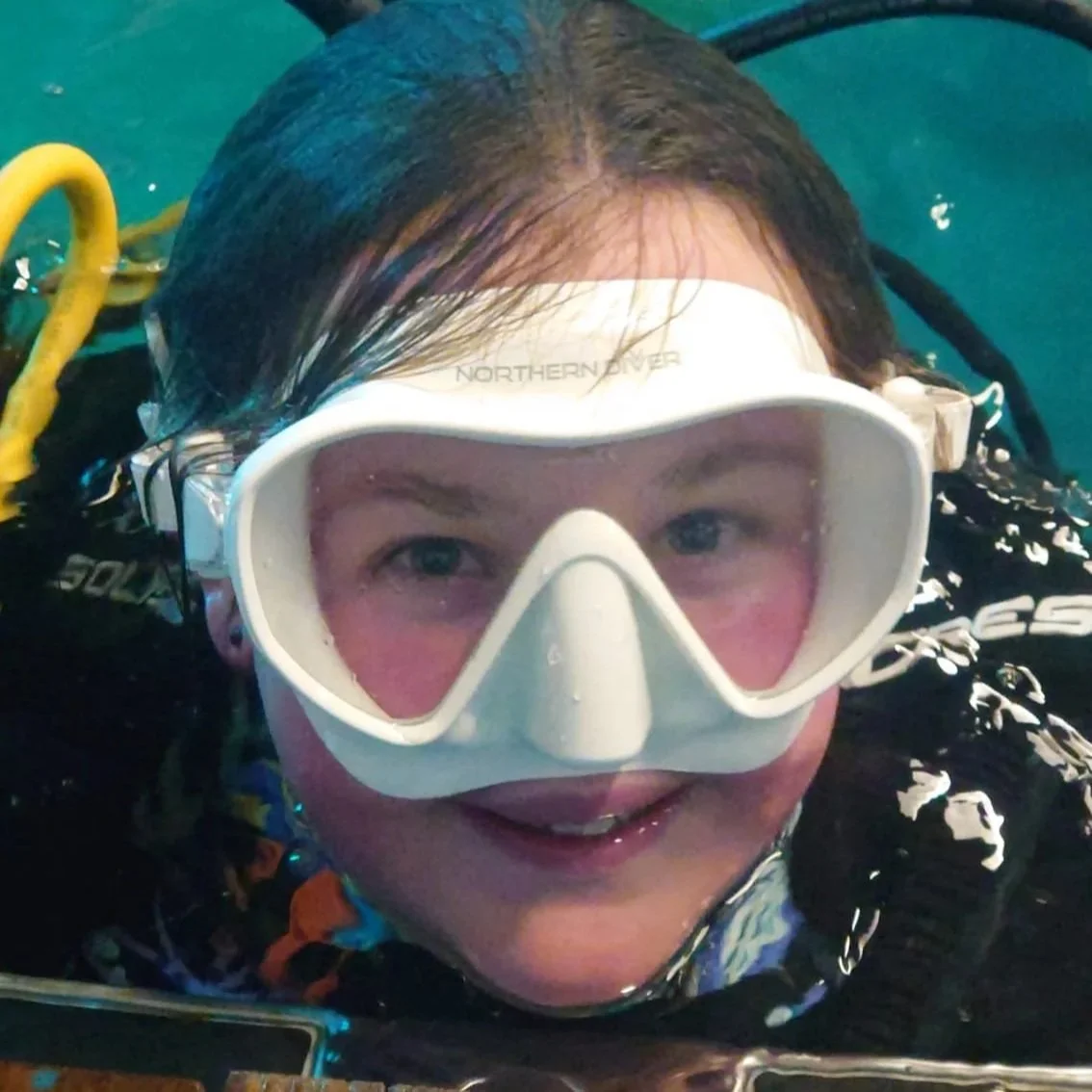
Wearing a mask also changes the experience considerably. It creates an air space in front of your eyes and allows you to see clearly rather than experiencing the blurred vision normally associated with opening your eyes underwater.
A well-fitting mask matters. A leaking or uncomfortable mask can distract a beginner and make an otherwise manageable situation feel stressful.
Tell the instructor if the mask pinches, presses heavily against your face or repeatedly fills with water. Equipment should be adjusted to suit you.
What if water enters my mask?
A small amount of water entering a mask is not an emergency.
During diver training, you learn how to clear water from your mask while continuing to breathe through the regulator. This is an important skill because masks can occasionally leak or be knocked slightly out of position during a dive.
However, nobody should surprise a nervous first-time diver by suddenly filling their mask.
Your instructor will explain what is going to happen and demonstrate the technique. You can practise progressively and signal if you need to stop.
The key idea is simple: the mask covers your eyes and nose, while the regulator remains in your mouth and continues supplying air. Water in the mask does not remove your ability to breathe.
Many students find mask skills intimidating beforehand but much more manageable once they understand that distinction.
Can I scuba dive if I feel claustrophobic?
People use the word “claustrophobic” to describe several different concerns.
You might dislike:
Having a mask against your face
Breathing only through your mouth
Being below the surface
Feeling restricted by equipment
Not being able to speak
The idea of open water or poor visibility
Identifying the specific trigger is more helpful than treating every concern as the same problem.
A private pool gives you a clear, bright environment with known boundaries. You are not immediately dealing with waves, cold water, reduced visibility or an unseen bottom.
Our pool also has a viewing window, so a friend, partner, parent or carer can watch from the dry side. For some people, seeing a familiar face helps make the experience feel less daunting.
Scuba should not be forced. A pool session provides an opportunity to discover how you respond without committing immediately to a complete qualification.
Will my ears hurt when I go underwater?
As you descend, the increasing water pressure affects the air spaces in your middle ears. Divers learn to equalise this pressure gently and regularly.
Your instructor will explain the technique before you descend. You should begin early, equalise frequently and never continue down through ear pain.
If your ears feel uncomfortable:
Stop descending.
Signal your instructor.
Move slightly shallower if needed.
Try equalising gently again.
If the discomfort does not resolve, the descent should be stopped. Forceful equalisation or continuing through pain can cause an ear injury.
Some people equalise immediately, while others need more time or a slightly different technique. Difficulty on the first attempt does not automatically mean you cannot dive.
You should not dive when congested or when you cannot equalise properly. If you have an ear condition or relevant medical concern, obtain appropriate medical advice rather than trying to push through it.
What if the equipment feels heavy?
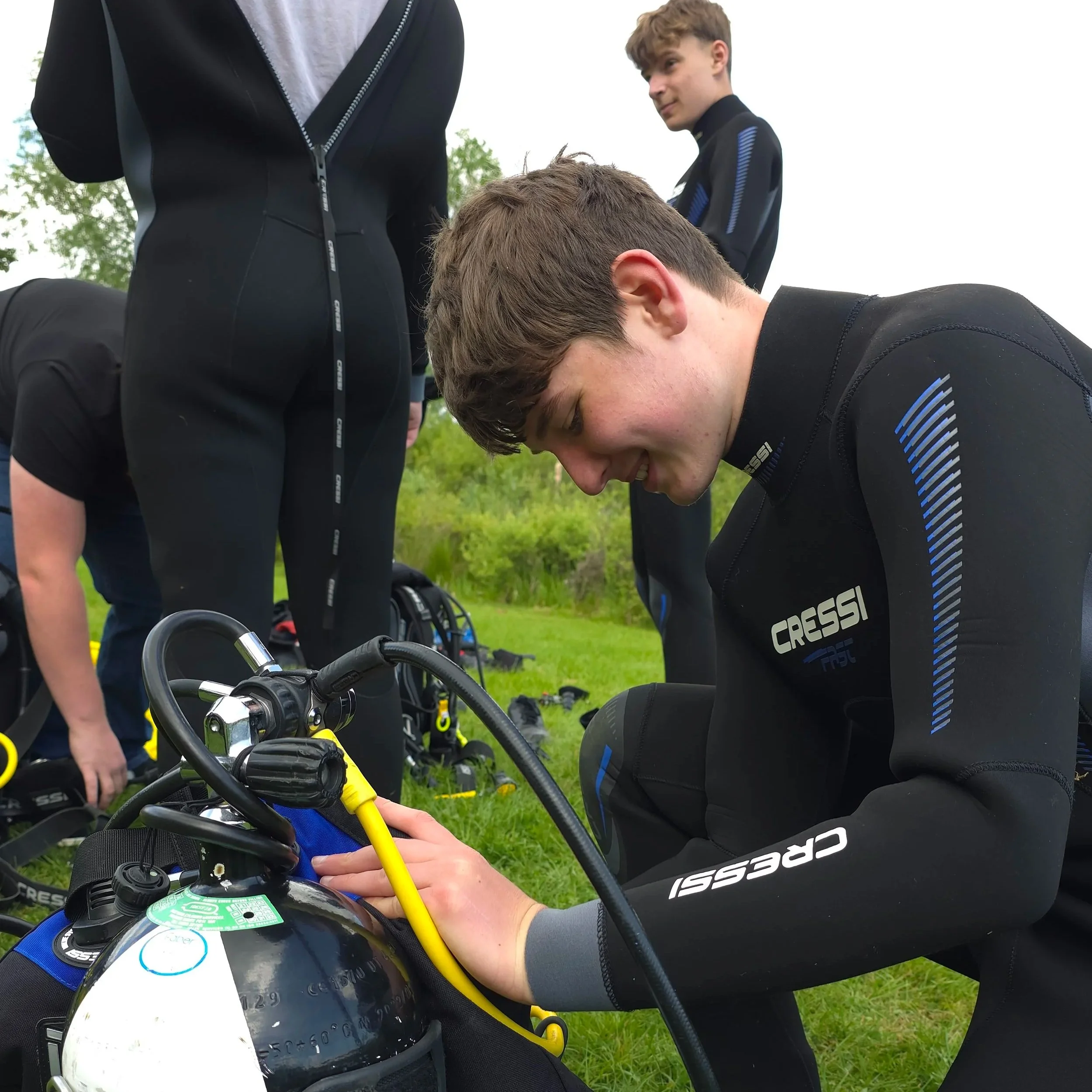
Scuba equipment can feel surprisingly heavy while standing on dry land. The cylinder, buoyancy control device and weights are designed for use in water, where their apparent weight and behaviour change.
Once supported by the water, most beginners find the equipment far less cumbersome. Your buoyancy control device can be adjusted to help you float comfortably at the surface.
At Abyss, the pool is just steps from our classroom and equipment area. We help you select and adjust the kit rather than expecting you to understand everything immediately.
You are there to learn. Nobody expects a first-time diver to know how to assemble the equipment, adjust every strap or move gracefully in fins from the first minute.
What if I use my air too quickly?
New divers often breathe faster because they are excited, concentrating hard or feeling nervous. That is normal.
Your instructor monitors the session and your equipment includes a pressure gauge showing how much air remains in the cylinder. You are not expected to guess.
As you become calmer and learn to move efficiently, your breathing will often become steadier. Air consumption is not a competition, and comparing yourself with an experienced diver is rarely helpful.
A person who has completed hundreds of dives will usually be more relaxed and efficient than somebody taking their first underwater breaths. That comes with experience.
Do I need to be a strong swimmer?
You do not need to be an Olympic swimmer to try scuba diving, but you should be reasonably comfortable in the water and meet the requirements of the particular experience or course.
Our PADI Discover Scuba Diving experience is an introductory pool session rather than a full certification course.
The PADI Open Water Diver course includes water-skills requirements, including a 200-metre swim without a swimming aid and a 10-minute float or tread. There is no time limit for the swim.
If you are uncertain about your swimming ability or water confidence, speak to us before booking. We can explain what the chosen programme involves and help you decide on an appropriate starting point.
Should I book a Try Dive or go straight to Open Water?
If you are interested in diving but unsure how you will react, a Discover Scuba Diving experience is often the most sensible first step.
At Abyss, the experience currently costs £55 per diver and includes:
Easy-to-follow eLearning
All required scuba equipment
An introduction from a PADI professional
Approximately 45 minutes of pool experience
The opportunity to breathe and move underwater
No requirement to commit to a full qualification
It is important to understand that Discover Scuba Diving is an experience, not a certification.
If you already feel comfortable and know that you want to become a qualified diver, you may choose to begin the PADI Open Water Diver course instead. This includes knowledge development, confined-water training and four open-water training dives.
There is no wrong choice. The best starting point is the one that allows you to learn without feeling rushed.
How Abyss supports nervous beginners
Our Littlehampton dive centre has been designed around scuba training rather than borrowing occasional space in a public swimming pool.
Beginners benefit from:
A private heated indoor pool
A dedicated scuba-training environment
Small-group instruction
Qualified and experienced PADI professionals
A pool viewing window for family, friends and carers
Equipment fitted and explained on site
Classrooms immediately beside the pool
Free parking at Littlehampton Marina
Experience supporting nervous learners and people with additional needs
Having our own pool gives us greater control over the environment. There is no cold open water during your first experience, no waves and no unrelated public swimming session taking place around you.
That does not mean we can promise that every person will instantly love scuba diving. It means we can give you a calmer and more supportive opportunity to find out.
Complete the medical questionnaire honestly
Before participating, you will need to complete the required medical screening.
Answer every question honestly. If one of your answers indicates that medical clearance is needed, obtain the appropriate assessment before diving.
An instructor cannot provide personal medical clearance or tell you to ignore a condition. If anxiety, medication, breathing difficulties, ear problems or another health issue is relevant to the questionnaire, it needs to be addressed properly.
This protects you and helps the dive centre plan an appropriate experience.
Nervous does not mean incapable
Confidence in scuba diving is rarely about being fearless. It comes from understanding the equipment, practising the skills and discovering that you can respond calmly when something feels unfamiliar.
You are allowed to:
Ask questions
Take your time
Repeat a skill
Tell your instructor you are nervous
Signal that something does not feel right
Stop the session if you do not want to continue
There is no benefit in hiding your nerves from your instructor. Knowing how you feel helps us support you properly.
Your first underwater breath may feel strange. The second normally feels a little less strange. A few breaths later, you may find yourself looking through the viewing window, waving at the person who came to support you and wondering why you waited so long to try it.
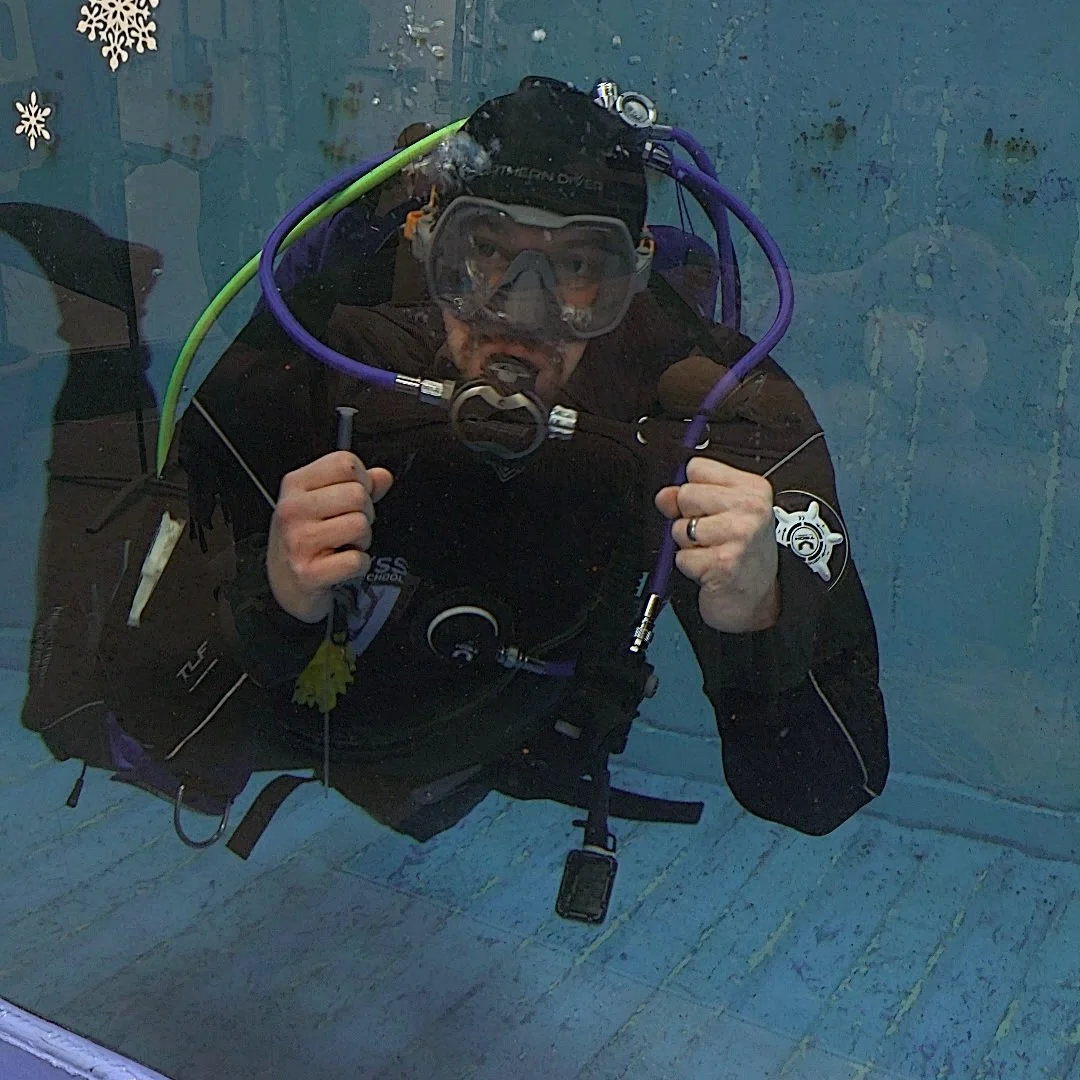
Ready to take your first breath underwater?
If you are nervous but curious, start with a PADI Discover Scuba Diving experience in our private heated pool at Littlehampton Marina.
All the equipment is provided, and the session is designed for people with no previous scuba experience.
Book your Discover Scuba Diving experience or contact Abyss Scuba School first if you would like to discuss your concerns.
